Showing posts with label Week 4/5 - 2 Vehicles. Show all posts

Final '2 Vehicles'

The Lantern Glider

The main idea behind this lantern powered glider was the use and experimentation of the physics of a flying lantern, combining it with our orignial week 4 research on hang gliders. The two combinations allowed us to create a dystopia non-renewable form of transport, that could physically lift and ‘float’, but still give the users in the glider a sense of adrenaline and fear. The glider has two sides that are symmetrical, which hang two basket like objects which carry the passengers, while the whole glider is actually lifted by the lantern.

This enabled the experience of using this vehicle interesting, slightly dangerous and gave a strong sense of being swept through the air -similar to the qualities of a hang glider. This journey was more based on a ‘dystopia’ type of journey, as it used a non-renewable energy source to mobilise the vehicle (burning material to create heat lift). As well as the emotions, experience and feel of the passengers, when lifted up in the air, hanging by steel cables and a cradle for support.

 The landing area
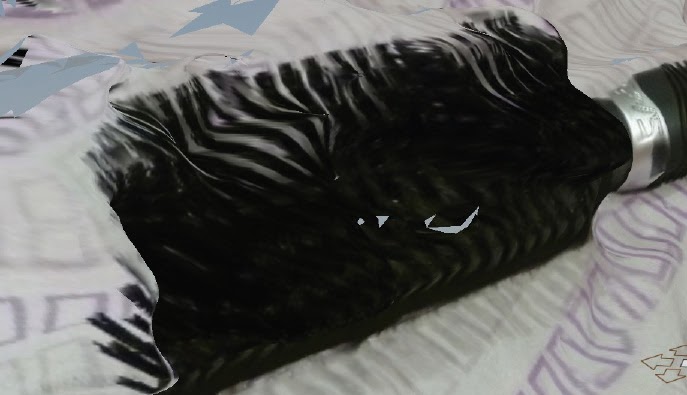

 The shape, form and idea of our lantern-gliding landing was all influenced by one of our 123D catch models. We produced a warped distorted model of a hairbrush, and a coffee cup - using the hairbrush for the lantern landing. The distortion illustrated by the 3D catch model gave the form interesting patterns, textures and shape, which allowed us to further develop into a structure for the landing platform. It allowed us to use this model as a ‘starting point’ for us to explore interesting ways to portray this lantern/gliding landing on our hotel.
The shape and way the brushes on the hair brush are placed, gave inspiration for creating a warped, bent metal structure that would be lodged into the side of the hotel exterior - using a cantilever. The top part that curves outwards provides a place for the glider to hang on when it has landed, and the bottom section provides a softer place for the passengers to land on after they have finished their journey.


 The boat


 The boat landing
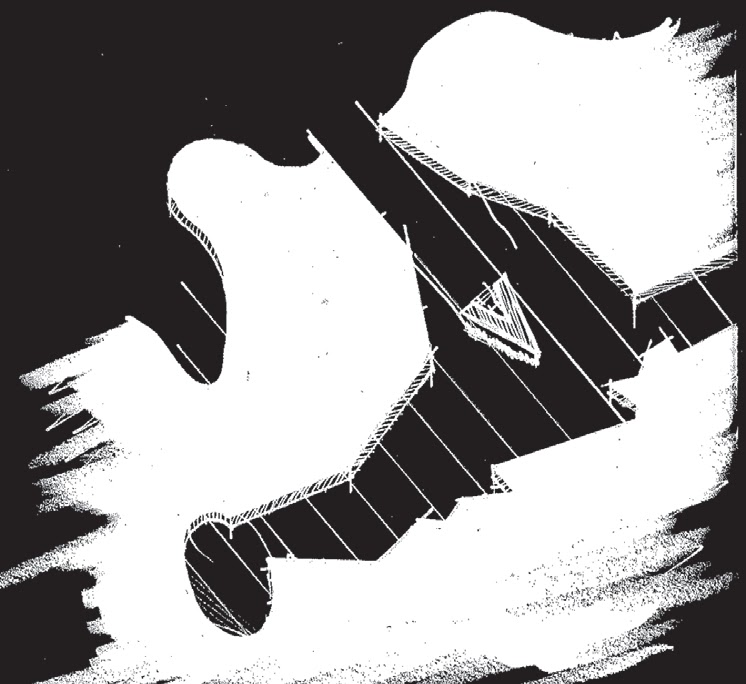


 The map of those two sites


Read more »

Second Vehicle - Boat

Firstly, we have used bamboo sticks to build the frame of the boat.


Final Model


 Then used the wet rice paper to create the surface.

 After a long time's dry, we did the waterproof for the boat, and test it on the washbasin.
 With the success, we have made a simple wood paddle wheel.

Read more »

Research - Paddle Wheel

The normal paddle wheel is a large wheel, built on a steel framework, upon the outer edge of which are fitted numerous paddle blades (called floats or buckets). The bottom quarter or so of the wheel travels underwater. Rotation of the paddle wheel produces thrust, forward or backward as required. More advanced paddle wheel designs have featured feathering methods that keep each paddle blade oriented closer to vertical while it is in the water; this increases efficiency. The upper part of a paddle wheel is normally enclosed in a paddle box to minimise splashing.


When we were doing the research, we found the following picture and got the idea about the paddle wheel which we can make successfully with our wood workshop. It was supposed to use the rubber band to provide the kinetic energy.


Read more »

3D Printed Components

Task: Choose 3 small parts of the vehicles 1 per team member – construct the appropriate mesh to be printed on the 3d printer. The objects should not be bigger than 120 x 120 x 30mm or equivalent.

The passenger's seat of the Flying lantern


The Chair

 The connection part of two boats


Read more »

Materials

Filo pastry


  Filo pastry is a sort of common material which is always used to make dessert or pie. Flour, water and butter should be mixed with a particular proportion to make a dough and then gently stretched until it is thin as a tissue paper.

  For this workshop, the filo pastry works as a pivotal role of our vehicles. Because of the adhesiveness of the paste, different filo pastry layers can be easily connected by moistening with some cold water.  When those layers dry again, they will become to an interwoven ensemble, and stiffness.  Therefore, it is a real good material for making the scarfskin of the model.
There are some matters needing attention in using the filo pastry. The most important thing is that we must control the dosage of water.  Otherwise, the filo pastry will dissolve in the water or become too weak to stay on the frame.


Seaweed Paper


  Seaweed paper (also called: Nori) is edible seaweed species of the red alga genus Porphyra, though as the rampant popularity of sushi. Finished products are made by a shredding and rack-drying process that resembles paper making. The seaweed paper is commonly used as a wrap for sushi and onigiri. It is also a garnish or flavoring in noodle preparations and soups. 
  Seaweed paper is hackly and full of the plant fibre paper which is mainly made for the dry seaweed.We use water to attach the seaweed paper together and what we also found was the seaweed became a little bit elastical after wetting. To compare with the dry seaweed and wet ones, the dry seaweed is crispy but the wet seaweed can be shaped easily--as it was not that fragile and when it turns to dry, the shape was fixed as the one it was made.


  When we were trying to improve the flying lantern, the basic principle we followed was reduce the weight of the lantern as much as possible. Therefore, seaweed paper, which is the lightest material amount those three, was selected as the material of the glider wings. Besides, wire is very light but strong enough to provide the support the material’s striction. It is perfect for the glider wings’ frame.


Rice paper


  Rice paper usually refers to paper made from parts of the rice plant, like rice straw or rice flour. The term is also used for paper made from or containing other plants, such as hemp, bamboo or mulberry. Rice paper has been used for centuries in Vietnam, Korea, China and Japan for writing and artwork. 
  The tapioca powder makes the rice paper glutinous and smooth. It is usually sold dried in thin, crisp, translucent round sheets that are wrapped in cellophane. The sheets are dipped briefly in hot water to soften them, then wrapped around savory or sweet ingredients.


   For this workshop, we were asked to make a vehicle which can float on the water.  After comparing those three materials, we chose the rice paper as the main material of the boat, which was most strong and impacted less by the cold water. For the final project, we used bamboo sticks and masking tape to build the basic structure. Then, rice papers were cut into small pieces and put into hot water separately. Soaking those rice papers until that they are soft enough and covering them on the frame.  After the whole object fully dried, we did waterproof for it to make the boat stronger.


Some common characters of those three materials


1. They have the quale of adhesiveness when they are moistened by the water. However, the temperature of the water affects the drying processing of the material. 
2. All of them are contractile materials. So the original shape of the frame will change with the attachment of those materials.
3. After drying, those materials are solid, stabilize but crisp. Therefore, increasing the amount of layers you put on the frame is helpful.
4. All of them will take a long time to dry.
5.They can be shaped easily when they are wet---soft when wet but after drying turn to fixed.


Read more »

Reinventing Flying Lantern (3)

Experiencing twice failure, we decided to change our inventing plan. We started to combine two lanterns and just create some interesting seats for passengers to experience an exciting travel.


The experiment really works. Therefore, we prepared to make our final lantern based on this one.
Read more »

Reinventing Flying Lantern (2)

With the experience of last test, we changed the main material to the butter paper and made the lantern as big as possible. The fuel also be changed to the solid alcohol which can provide much more heat energy than candles.


Conclusion

Read more »